
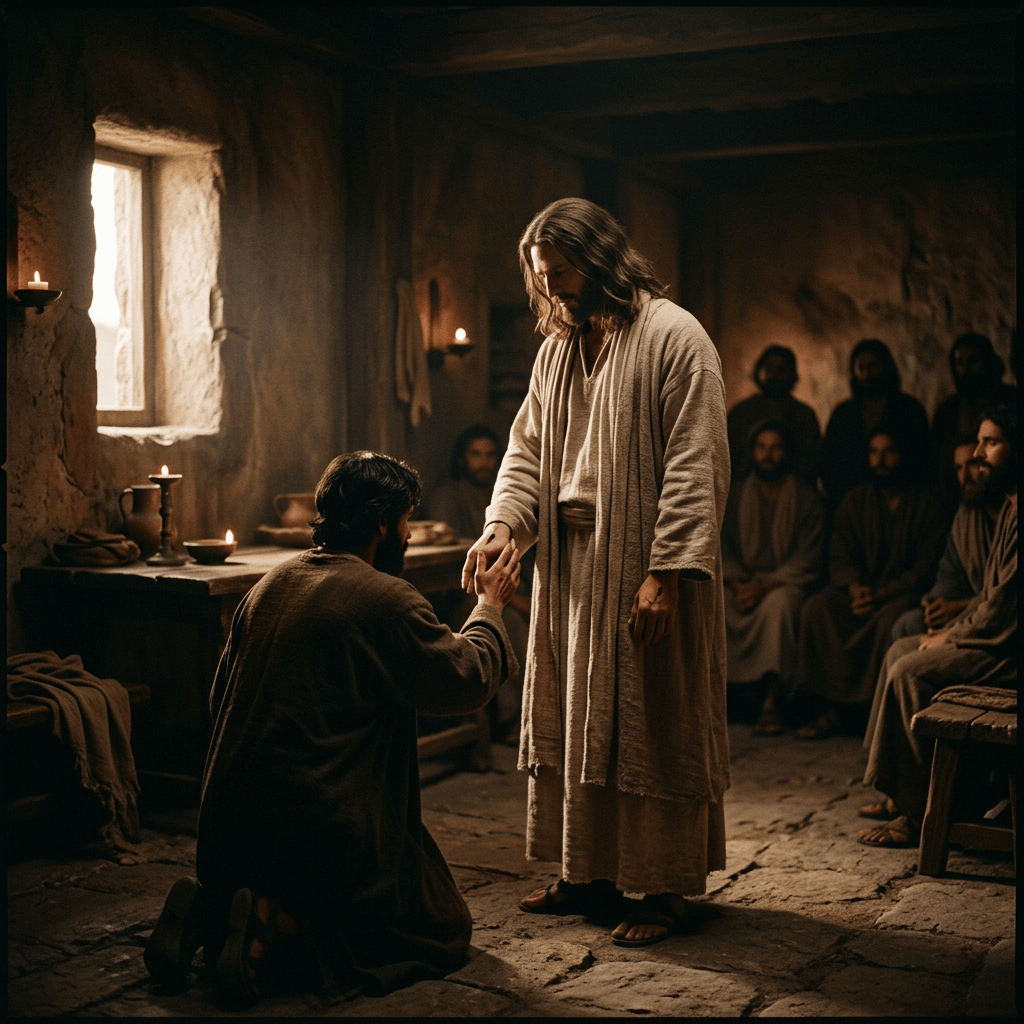
Jesus Appears to Thomas John 20:24-31
What if God is asking you to trust Him before you can see the answer?
🎬 The Hook: “I Need to See First.”
There are moments in life when faith becomes difficult—not because we have stopped believing in God, but because we cannot see what He is doing.
We pray.
We wait.
We do our best.
Still, the answer does not come.
The door remains closed. The provision seems uncertain. The future looks unclear.
And somewhere deep inside, a question begins to whisper:
“Lord, where are You?”
The world often teaches us, “To see is to believe.”
And, in many situations, that is wise. We live in a world where people can deceive, manipulate, and make false promises. We need discernment and due diligence.
But when it comes to our relationship with God, Scripture calls us to something deeper.
Not blind faith.
Not foolishness.
But trust in the One who is faithful.
Hebrews 11:1 says:
“Now faith is confidence in what we hope for and assurance about what we do not see.”
Hebrews 10:23 gives us another reason:
“Let us hold fast the confession of our hope without wavering, for He who promised is faithful.”
That brings us to a disciple who struggled with exactly this tension.
His name was Thomas.
And perhaps, if we are honest, there is a little bit of Thomas in all of us.
📖 Scripture: John 20:24–31
Thomas, one of the Twelve disciples, was not with the others when Jesus first appeared to them after His resurrection.
When the disciples told him, “We have seen the Lord!”, Thomas refused to believe unless he could see the nail wounds in Jesus’ hands and touch the wound in His side.
Eight days later, the disciples were together again.
This time, Thomas was with them.
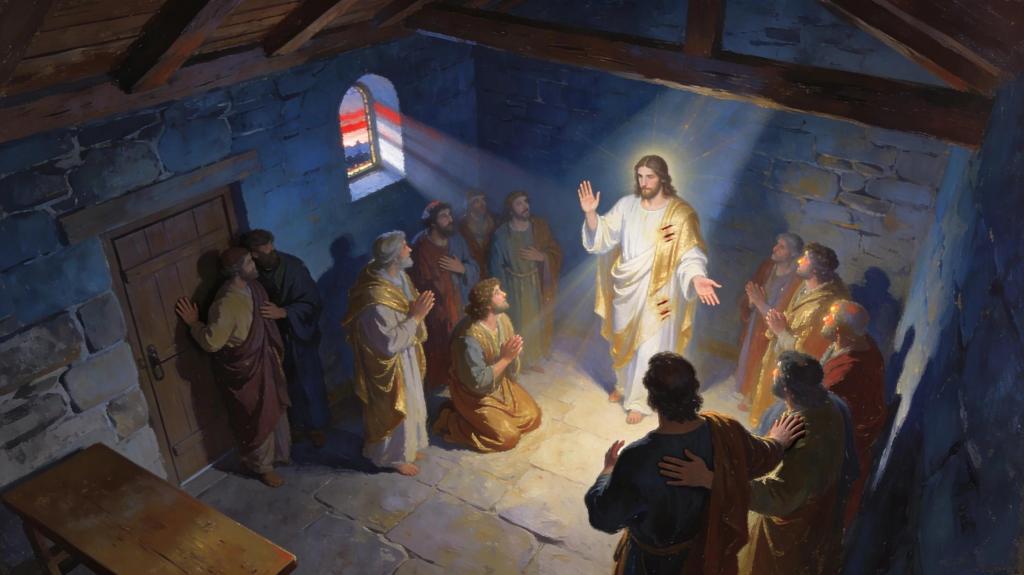
The doors were locked.
Then Jesus suddenly appeared among them and said:
“Peace be with you.”
Jesus then turned toward Thomas and said:
“Put your finger here; see my hands. Reach out your hand and put it into my side. Stop doubting and believe.”
Thomas answered:
“My Lord and my God!”
Jesus said:
“Because you have seen me, you have believed; blessed are those who have not seen and yet have believed.”
John then explains why these things were written: Jesus performed many other signs that were not recorded in the book, but these were written so that people may believe that Jesus is the Messiah, the Son of God, and that by believing, they may have life in His name.
🚪 Scene One: Thomas Wasn’t There
Imagine that room.
The disciples had gathered together.
Fear was still hanging over them after Jesus’ crucifixion.
Then suddenly, Jesus appeared.
“Peace be with you.”
Can you imagine their shock?
Their sorrow had turned into joy.
The One they thought they had lost was alive.
But Thomas was not there.
He missed the encounter.
Later, the other disciples found him and excitedly told him:
“We have seen the Lord!”
But Thomas could not accept their testimony.
He needed to see for himself.
He needed to touch the wounds.
He wanted evidence.
His response was essentially:
“Unless I see, I will not believe.”
Thomas had walked closely with Jesus.
He had heard His teaching.
He had witnessed His miracles.
Yet when confronted with something that seemed impossible, his faith struggled.
Isn’t that sometimes what happens to us?
We can have years of walking with God, yet one difficult situation can suddenly make us wonder:
“Can God really handle this?”
🍞 When We Forget What God Has Already Done
The disciples themselves had experienced something similar.
Jesus had fed five thousand men with five loaves and two fish.
Later, He fed four thousand with seven loaves and a few fish.
Yet when another situation arose, the disciples again wondered where they would find food.
They had seen God’s provision.
But when a new problem arrived, they seemed to forget the old miracle.
And I wonder:
Have I ever done the same thing?
Perhaps you have too.
God answered yesterday’s prayer.
Then today’s problem arrives.
Suddenly, we worry.
God provided when we thought there was no way.
Then another need appears.
We panic again.
God opened a door we thought would never open.
Then another door closes.
We become afraid.
It is remarkable how quickly fear can make us forget faith.
Sometimes the problem isn’t that God has never proven Himself faithful.
The problem is that we forget.
That is why remembering God’s faithfulness is so important.
When today’s circumstances become frightening, we need to remember yesterday’s grace.
🔥 Scene Two: Eight Days Later
Eight days passed.
The disciples were together again.
And this time, Thomas was there.
The doors were locked.
Then Jesus appeared.
Again:
“Peace be with you.”
But this time, Jesus went directly to Thomas.
He knew exactly what Thomas had said.
He knew exactly what Thomas needed.
And notice something beautiful:
Jesus did not reject Thomas.
He did not shame him.
He did not publicly humiliate him.
He met Thomas right in the middle of his struggle.
“Put your finger here.”
“See my hands.”
“Reach out your hand and put it into my side.”
Then Jesus said:
“Stop doubting and believe.”
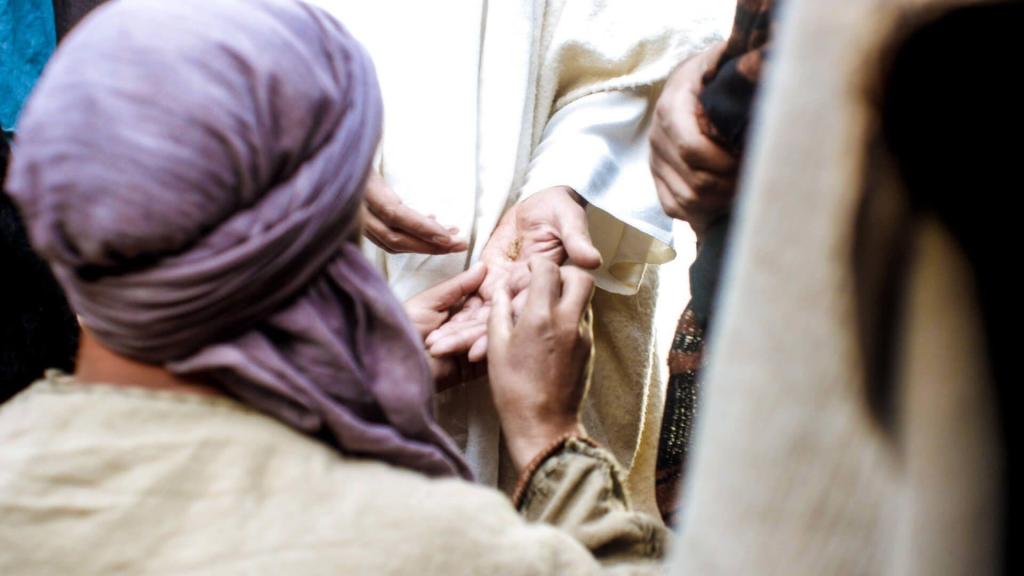
What must Thomas have felt?
The wounds he demanded to see were right in front of him.
The hands that had been pierced were before his eyes.
The side that had been wounded was real.
The crucified Jesus was alive.
And suddenly Thomas moved from doubt to worship.
He exclaimed:
“My Lord and my God!”
Those words are the emotional climax of the story.
Thomas did not simply say, “Now I have proof.”
He said:
“My Lord.”
“My God.”
He recognized who Jesus truly was.
🕊️ Jesus Was Patient With Thomas
There is something deeply encouraging here for anyone who has struggled with faith.
Thomas was still a work in progress.
So were the other disciples.
And so are we.
Sometimes we think God expects us to have perfect faith immediately.
But the story of Thomas reminds us that Jesus is patient with His followers.
Jesus knew Thomas’s weakness.
Yet He continued to work in him.
That gives me hope because I know that I am also a work in progress.
The Lord has been changing me over the years.
I have noticed changes in my behavior, habits, and character.
Even my son, family members, and friends have noticed some of those changes, particularly in how I treat other people.
I am more patient now.
In the past, I was told that some of my issues were impatience, being demanding, and being argumentative.
I am not perfect.
I still have weaknesses.
I still make mistakes.
But when I look back, I can see something clearly:
God has been working in me.
And perhaps one of the greatest things He is teaching me is that faith is not merely something I say.
Faith is something I practice through the way I respond to life’s uncertainties.
🌙 My Own “Thomas Moment”
My present struggle has involved career and financial stability.
There have been highs and lows.
And when things become extremely low, it can be frightening.
There were times when I panicked.
I became very conscious about maintaining my reputation. I wanted to pay my debts and obligations on time because I had previously asked God to help me become responsible with my finances.
I did not want to dishonor the name of Christ that I carry as a Christian.
But there were moments when I felt as though I was going backward.
The old fears seemed to return.
And there were times when I could not see God’s hand.
Inside, I cried out:
“Jesus, please help me!”
Yet in those moments, I sensed His assurance that He had always been with me.
Then, unexpectedly, provision came.
It reminded me of something important:
God had not forgotten me.
I had simply been unable to see what He was doing.
And isn’t that exactly where faith becomes real?
Not when everything is visible.
Not when every prayer has been answered.
Not when the future is secure.
But when we stand in the middle of uncertainty and still choose to say:
“My Lord and my God.”
🌿 The Difference Between Faith and Foolishness
Thomas’s story does not teach us to abandon wisdom.
The world is filled with deception, and we should practice discernment.
Biblical faith does not mean believing every claim someone makes.
It means trusting God.
Christian faith is not pretending something is true without reason.
John himself recorded signs and testimony so that people could believe that Jesus is the Messiah, the Son of God.
Faith has a foundation.
But faith also reaches beyond what our physical eyes can presently see.
That is why Jesus said:
“Blessed are those who have not seen and yet have believed.”

We did not physically stand in that room with Thomas.
We did not touch Jesus’ wounds.
We did not see the risen Christ with our physical eyes.
Yet we believe.
We trust the testimony of Scripture.
We believe in Jesus.
We listen to the Holy Spirit.
And we experience His transforming work in our lives.
So perhaps the better question is not:
“Can I see the answer?”
But:
“Do I trust the One who holds the answer?”
⏳ The Season of Waiting
Today, I am still waiting.
There are things I have asked God for that I have not yet received.
I have told Him about them.
I have asked Him to send the answer.
And honestly?
I still don’t see it.
Not even a clear hint.
That is where the conflict inside me becomes real.
One part of me says:
“Where is it, Lord?”
Another says:
“Trust Him.”
One part says:
“You need to do something.”
Another says:
“Wait for God’s direction.”
One part says:
“What if nothing changes?”
Another reminds me:
“Has God ever stopped being faithful?”
This is where I realize that faith is not merely what I say when everything is going well.
Faith is what I practice when I cannot see the outcome.
And I can honestly say that something has changed in me.
Only a few months ago, I could easily panic.
Today, I still have concerns, but I don’t panic the way I used to.
My circumstances may not have completely changed.
But something inside me has changed.
My trust is becoming steadier.
My heart is learning to rest.
And perhaps that is one of God’s answers to my prayer.
💡 Maybe God Is Changing Me Before He Changes My Circumstances
This is one of the most important lessons I am learning.
Sometimes we pray:
“Lord, change my situation.”
But God may first be saying:
“Let Me change you in the situation.”
Perhaps He is developing patience.
Perhaps He is teaching dependence.
Perhaps He is removing self-reliance.
Perhaps He is teaching me that my security cannot ultimately be found in a business, career, savings account, reputation, or even my ability to solve problems.
Perhaps He is teaching me to say:
“Father, I will do what You have given me to do, but I will trust You with what only You can do.”
That is surrender.
And surrender is not giving up.
It is giving over.
Giving our plans over to God.
Giving our timeline over to God.
Giving our fears over to God.
Giving our future over to God.
Proverbs 16:3 says:
“Commit your actions to the LORD, and your plans will succeed.”
I am learning to do exactly that.
❤️ When You Cannot See God’s Hand, Remember His Heart
Perhaps you are in your own season of waiting.
Maybe you have been praying for months.
Maybe years.
Maybe you are asking:
“Why hasn’t God answered?”
I don’t know what God will do in your particular situation.
And I don’t want to give you a promise that Scripture does not give.
But I can remind you of what Scripture does tell us:
God is faithful.
God knows.
God is present.
God loves you.
You may not understand His timing.
You may not understand His methods.
You may not understand why He allowed a particular season.
But you can still know His character.
When you cannot see His hand,
remember His heart.
When you cannot see the road,
trust the One who sees the destination.
When you cannot see the provision,
remember the Provider.
When you cannot see the answer,
remember the One to whom you prayed.
🌱 Life Application: Walking by Faith Today
When you find yourself struggling with doubt, uncertainty, or waiting, try these six things:
1. Bring your honest feelings to God.
Don’t pretend you’re not afraid.
Tell Him exactly what is happening inside you.
“Father, I am afraid.”
“Lord, I don’t understand.”
“Jesus, I need Your help.”
Prayer is not pretending to be strong.
Prayer is bringing our weakness to the One who is strong.
2. Remember what God has already done.
Make a list of answered prayers, unexpected provision, closed doors that protected you, and moments when God carried you through.
Your memory can become a testimony when fear tries to erase it.
3. Distinguish responsibility from control.
Do what God has given you to do.
Work.
Plan.
Pray.
Seek wisdom.
Be responsible.
But don’t try to become your own provider, protector, and savior.
Do your part and trust God with His part.
4. Ask what God may be developing in you.
Instead of only asking:
“When will this situation change?”
also ask:
“Lord, what are You changing in me?”
5. Surrender your timeline.
Tell God:
“I want this, but I trust Your timing more than mine.”
This is difficult.
But it is one of the most freeing prayers we can pray.
6. Let your waiting become a testimony.
Perhaps the season you are struggling through today will become the story that encourages someone tomorrow.
Don’t waste the waiting.
Let God use it.
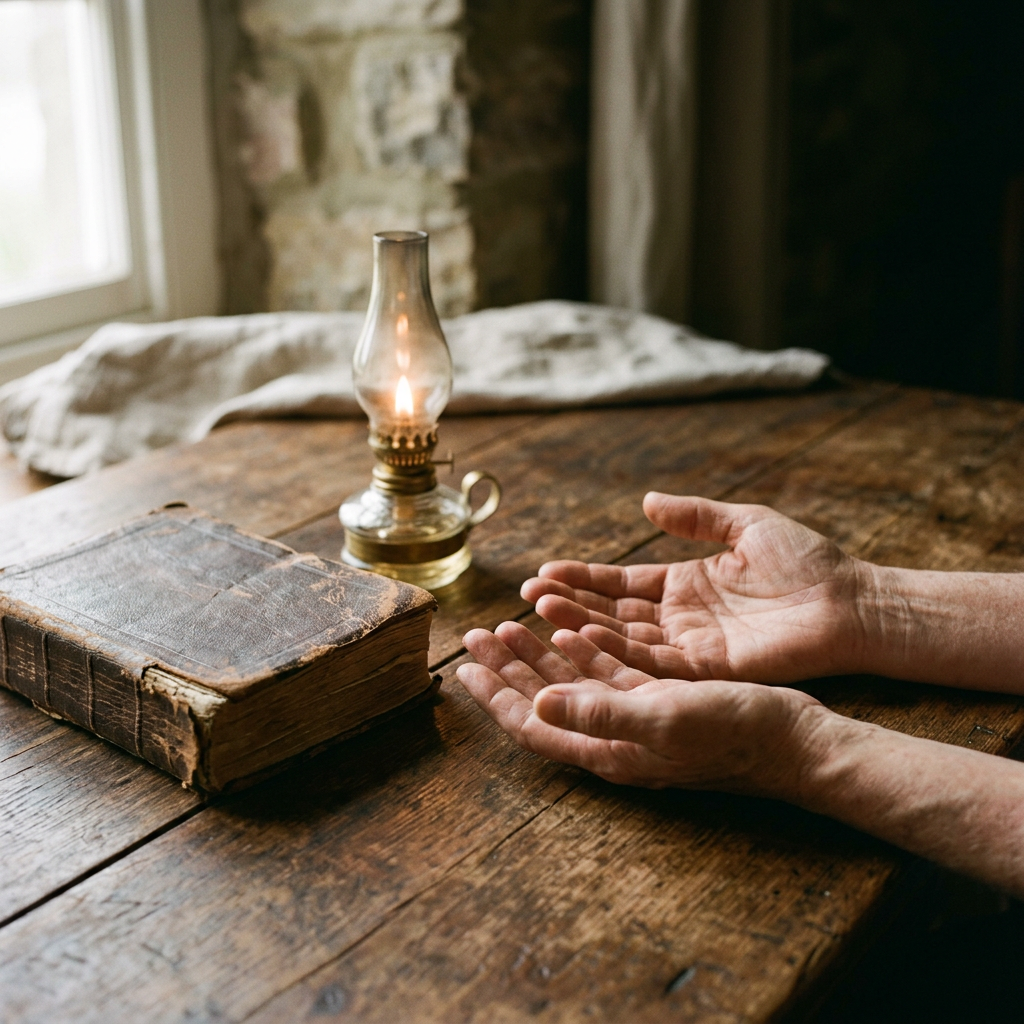
🖊️ Journaling: What Am I Still Holding?
Find a quiet place.
Open your Bible.
Take your journal.
And ask the Lord:
“Father, what am I struggling to trust You with?”
Then write honestly.
Consider these questions:
- What situation am I trying to see before I am willing to trust God?
- What has God already done for me that I tend to forget when a new problem comes?
- Where am I relying on myself instead of surrendering to God?
- What might God be developing in me during this season?
- What three specific moments can I write down that remind me God has been faithful?
Then complete this sentence:
“Lord, even though I cannot see ____________, I choose to trust You because ____________.”
Don’t rush.
Sit with your answer.
Let it become a prayer.
🕯️ Prayer: “My Lord and My God”
Abba, Holy Father,
Please forgive me for the times I waver in faith when I cannot see Your hand.
Forgive me when fear causes me to become self-reliant.
Forgive me when I pray and surrender something to You, only to take it back again because I become anxious about the outcome.
Lord, teach me to trust You.
Help me remember that You are Omnipotent, Omniscient, and Omnipresent.
You are all-powerful.
You know everything.
You are always present.
There is nothing happening in my life that is hidden from You.
Father, I surrender my plans to You.
Align my work with Your will.
Direct my steps.
Give me wisdom to know when to move and when to wait.
Help me to do my part faithfully without trying to control everything.
You know the things I am waiting for.
You know the prayers I have repeated.
You know my concerns about my future, my finances, my work, and my responsibilities.
You know when I am afraid.
You know when I cannot see Your hand.
When I cannot see the answer, remind me that You are still faithful.
When I cannot see the road, remind me that You already know the way.
When I feel forgotten, remind me that You have never forgotten me.
Teach me to wait without losing hope.
Teach me to trust without demanding to know everything.
Teach me to surrender without giving up.
And when I am tempted to ask for proof again, bring me back to the truth of who You are.
Let my heart say with Thomas:
“My Lord and my God!”
Thank You for Your patience with me.
Thank You for continuing to work in me and through me.
Thank You for every provision I have received, even the ones I sometimes forget.
Thank You that my story is still being written.
And if You choose to use my present season of waiting as a testimony, let my story point not to my strength, but to Your faithfulness.
I surrender my fears.
I surrender my plans.
I surrender my timeline.
I surrender my future.
I choose to trust You.
In Jesus Christ’s name,
Amen.
🌅 The Final Question: What Will You Believe When You Cannot See?
Thomas entered the story needing proof.
He left declaring:
“My Lord and my God!”
Maybe you are entering this devotion carrying doubt.
Maybe you’re carrying fear.
Maybe you’re waiting for an answer that seems painfully delayed.
Perhaps you have prayed the same prayer again and again.
And perhaps today, nothing outside you has changed.
But maybe something inside you can change.
You may not see the provision yet.
You may not see the open door.
You may not see the healing.
You may not see how everything will work out.
But you can still trust the character of God.
Faith is not knowing everything God is doing.
Faith is knowing Who to trust with everything.
So keep praying.
Keep walking.
Keep obeying.
Keep remembering.
Keep trusting.
And when you cannot see the whole road ahead, take the next faithful step.
Then let your heart whisper:
“My Lord and my God.”
💬 Your Story May Encourage Someone Else
Have you ever experienced a “Thomas moment”—a season when you wanted God to show you the answer before you could fully trust Him?
What happened?
Did God eventually reveal something you could not see before?
Or are you still waiting and learning to trust Him in the middle of uncertainty?
Share your story in the comments. Your testimony may be the encouragement someone else has been praying for.
And if this devotion touched your heart, please consider sharing it with someone who may be struggling to trust God while waiting for an answer.
🌿 Continue Your Journey with God
Don’t let this moment with God’s Word end here.
Continue exploring Immanuel and Me, where we slow down, read Scripture, observe what God is showing us, reflect on His Word, and bring what we discover into prayer.
📖 Bible Reflections — journey deeper into God’s Word and discover how His truth speaks into everyday life.
🌱 Proverbs — discover practical wisdom for our words, decisions, relationships, character, and daily walk with God.
📚 Gospel of John — continue walking through the life, teachings, miracles, death, and resurrection of Jesus as we seek to know Him more deeply.
And if you don’t want to miss future Bible reflections and devotional stories, subscribe to Immanuel and Me.
Come back.
Read slowly.
Reflect deeply.
Pray honestly.
And let God’s Word continue transforming your life.
Because you may not always understand what God is doing.
But you can always choose to trust who God is.
“My Lord and my God.”
 Immanuel and Me
Leave a comment